When the immune system goes bad, its sort of like a
delinquent teenager. (Not that you guys would know anything about this)…

See. Look. Delinquent. Sitting outside of school,
not soaking in knowledge in health class.
But it falls into one of three categories. Too much, too
little, or totally inappropriate.

Patty Dolan- Super Professor
I can’t claim to have made this up, when I
was in college, I had a professor who categorized immune issues
like this, and I never forgot it. So here is me hoping this helps immune
malfunction stick in your head as well as it did in mine.

wow! Look at that immune response!
If you want, you can think of your immune system as a
well-trained army...

.....with members who have the assignment of patrolling your body, seeking out enemy antigens, and signaling the body to attack them with the appropriate antibodies.

For the most part, this army attacks things appropriately. It attacks quickly, if it has seen the enemy before (like from previous illness, or vaccine) and already has antibodies for the enemy created. In these cases, you most likely will not even have symptoms of the illness!
.....with members who have the assignment of patrolling your body, seeking out enemy antigens, and signaling the body to attack them with the appropriate antibodies.
scouting out an area for enemies, like your immune system
For the most part, this army attacks things appropriately. It attacks quickly, if it has seen the enemy before (like from previous illness, or vaccine) and already has antibodies for the enemy created. In these cases, you most likely will not even have symptoms of the illness!
Other times, like with the viruses that cause the common
cold, the antigen is frequently changing, so the immune system takes longer to
respond, as it creates the appropriate antibodies to fight the infection. (In
these cases, because of the delayed response, you get the sniffles, cough, or
whatever symptoms your pet pathogen brings with it!)

Now, if this army, your immune system, decides to have a
coup de ta’, or if forced for some reason to be ineffective, several
non-infectious diseases (and at times infectious diseases) can occur because of
the failures of immune function. We’ll look at examples of non-infectious
diseases related to immune function in more detail, in each different category
listed above.
1.TOO MUCH!
The “too much!” category is referring to autoimmune
diseases. The term “autoimmune” describes a category of diseases in which the
immune system has decided that the entire body, or part of a body system,
organ, tissue, etc, (like we learned about in a previous blog) is an ENEMY.
Either for no reason, or for various reasons, the immune
system attacks and starts to destroy
its own body cells.
Type 1 diabetes is a disease in which the body identifies
the insulin creating cells in the pancreas as an ENEMY, and attacks! By the
time people show symptoms of Type 1 Diabetes, it is likely that near 90% of
their beta cells are already destroyed!
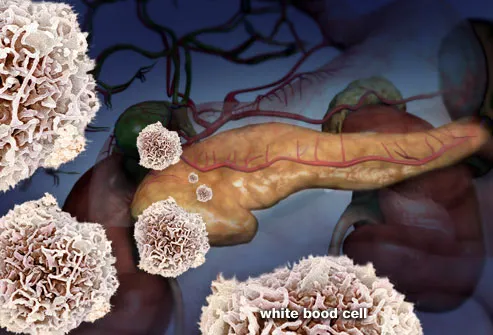
White blood cells attacking pancreas beta cells
Another autoimmune disease is multiple sclerosis. Again, in
this non-infectious disease, we see our body’s defense system, attacking
itself! Watch the video below for more information on this debilitating
disease.
There are nearly endless examples of non-infectious diseases
caused by TOO MUCH immune response.
There is probably one example for every body system, tissue and cells. It just
depends on what the body all of a sudden decides to attack and destroy.
Sometimes, the problem in the immune system is that the
response is just too little. One example of this is HIV, a virus that fools the
immune system into participating in the attack on the body. In HIV, the body
does not attack the intruder, because the intruder (HIV) takes over the immune
cells called the T-cells. Then, the body starts replicating the virus as it’s
own! Not only is the immune system not attacking, its assisting the spread and
takeover of the virus!
3. TOTALLY INAPPROPRIATE
Lastly, we have the category I believe every teenager can relate to, “totally inappropriate”. I know I heard that more than a few times when I was a teenager. But now you can use it in a whole new way! You see, allergies and asthma are two conditions in which the immune system reacts in an outrageous, pink Mohawk, yelling at the top of your lungs, driving 110 miles per hour, “totally inappropriate” way.


yelling at the top of your lungs

DRIVING 110 miles per hour!
With
allergies, the immune system has decided that a completely harmless antigen,
like pollen, is a foreign invader.
Thus, the body attacks it like it is a pathogen. Its like shooting one of the walls of a paintball course.
Its not on anyone’s team, you just wasted a shot! It’s a pointless, and “totally inappropriate response”. Allergies are something that progress,
as well. The first time someone who is allergic to bees is stung, they may not
have a full “anaphylactic” reaction.

pointless shots! Totally inappropriate response!
So, with allergies, the first time
your body sees a bee sting, it may not like it, so it builds some antibodies
and you get a small response. The second time, the body remembers the bee
sting, and although totally inappropriate,
mounts a full response. This is how people end up in anaphylactic shock.
Asthma is similar in many ways,
although much more complicated of a process. With people who suffer from asthma,
often times environmental things will stimulate their body into totally inappropriate action, in which,
the bronchial tubes will swell, and excess mucus will be produced, making it
very difficult to get air in and out of the lungs!
Okay, so the next time you hear
someone has an autoimmune disease, you can tell them, “You are just too much!” Or
the next time someone says they are allergic to bees or have hay fever you can
exclaim, “You are so totally inappropriate!” Then, quickly explain your witty joke
with what you’ve learned from your health class blog!
-Hip2HEALTH RN
___________________________________________________________________
1. Describe in your own words how when the immune system is "too much" disease can result.
2. Click on "type 1 diabetes" - It will take you to a link about a diabetic dog. Click on 'I would like to take care of a dog' - what did you name your dog? Play for 2 days. How much did you get paid each day? What happened to blood glucose when the dog was walked? How about when you fed it? What happened to blood glucose when you gave it insulin?
3. Watch the video on "Multiple sclerosis". Why does this disease fit in the "too much category?" What does this disease affect?
4. Click on the "too little" link. Watch the video on HIV. What type of cell does the HIV virus invade? Describe in your own words, (including citing your source) how HIV infections occur and why it is so difficult to find a cure.
5. Explain how the way the body reacts the second time to an allergen relates to the second time a body reacts to a previously seen disease.
6. Click on the "asthma link". What does the video describe happens to the lungs during an "asthma attack?" What are some things that might cause an asthma attack? How does this condition fit into the "TOTALLY INAPPROPRIATE" category?
7. Name some other conditions, with brief description, (AND CITE YOUR SOURCE) that fit into one of these categories.
-Hip2HEALTH RN
___________________________________________________________________
1. Describe in your own words how when the immune system is "too much" disease can result.
2. Click on "type 1 diabetes" - It will take you to a link about a diabetic dog. Click on 'I would like to take care of a dog' - what did you name your dog? Play for 2 days. How much did you get paid each day? What happened to blood glucose when the dog was walked? How about when you fed it? What happened to blood glucose when you gave it insulin?
3. Watch the video on "Multiple sclerosis". Why does this disease fit in the "too much category?" What does this disease affect?
4. Click on the "too little" link. Watch the video on HIV. What type of cell does the HIV virus invade? Describe in your own words, (including citing your source) how HIV infections occur and why it is so difficult to find a cure.
5. Explain how the way the body reacts the second time to an allergen relates to the second time a body reacts to a previously seen disease.
6. Click on the "asthma link". What does the video describe happens to the lungs during an "asthma attack?" What are some things that might cause an asthma attack? How does this condition fit into the "TOTALLY INAPPROPRIATE" category?
7. Name some other conditions, with brief description, (AND CITE YOUR SOURCE) that fit into one of these categories.

1. “Too much” disease is when the body’s immune system fights and tries to hurt its own cells. An example for your immune system for acting this way is Type 1 diabetes and autoimmune disease.
ReplyDelete2. I named my dog, dog 86. I got paid $1,192 for both days. When I walked the dog its blood sugar went to normal. I found out that if the dog’s blood sugar is going down then you have to give it sugar and when I gave it healthy food it stayed about the same. When the blood sugar got too high I gave it insulin and it got back to normal.
3. The loss of myelin (material surrounding nerves) makes the body think it is a disease and nerves signals are disruptive. This affects the central nervous system.
4. HIV can be passed sexually and/or by needles. It happens when blood and/or body fluid is passed. (http://kidshealth.org/teen/diseases_conditions/sexual_health/AIDS.html) The medicine that they give mostly kills HIV, but the patients stop taking the medicine after awhile and the Virus comes back. The medicine is to help stop the infection in the symptomatic system. (http://www.globalhealthforum.org/why-we-can%E2%80%99t-yet-cure-hiv.php)
5. The second time when an allergen enters the body it remembers it and how to attack it.
6. In the video it talks about asthma. It says there are two things that can happen during an asthma attack. One of them is inflammation that happens when the cell sees something like dust and then over reacts. Then chemicals are released and it makes the cell swell up. Exercise, emotions, air, and food can cause people with asthma to have an asthma attack. This fits in the “totally inappropriate” section because it reacts by the things around you, like pollen and dust.
7. My example for “Too Much” category is arthritis by not having fluids, and/or your cartilage is wearing away (http://www.medicinenet.com/arthritis/article.htm). For the “Too Little” category I chose leukemia because the cells attack the healthy blood cells (http://www.nlm.nih.gov/medlineplus/immunesystem.html). For the “Totally Inappropriate” category I chose food allergy because the immune system thinks that a protein is bad for you.